
Monitor Hut Data Story
Scope 2 reporting: the carbon figure was complete. The evidence wasn’t.
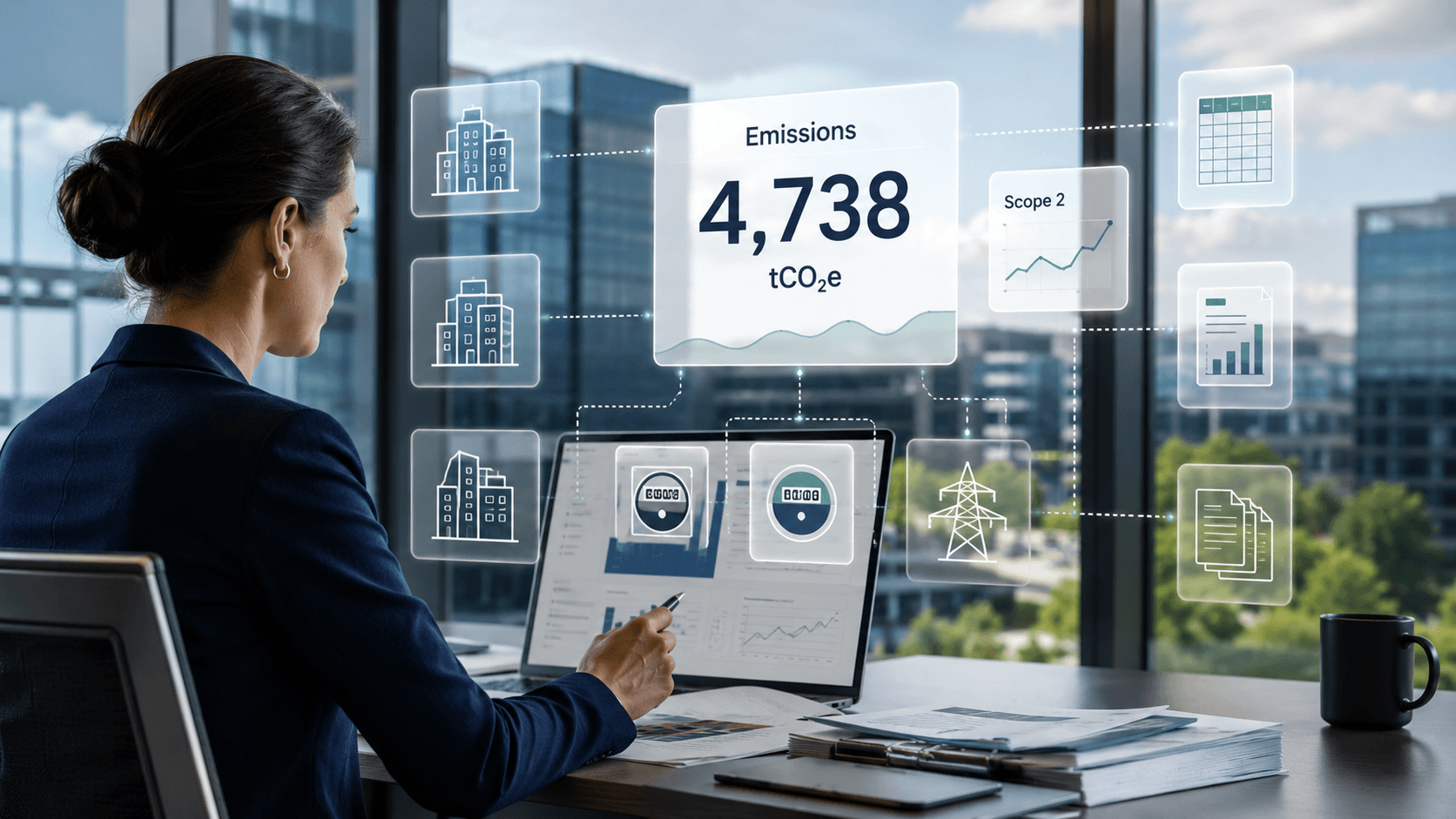
Reliable Scope 2 emissions reporting needs more than a final carbon total. It needs a traceable connection between every reported figure and the buildings, meters, reporting periods, estimates and electricity evidence underneath it.
Scenario note: This is an illustrative composite showing recurring building energy data problems across property portfolios. It is not presented as a named client case study.
In brief
Why does building energy data matter for Scope 2 reporting?
Scope 2 covers indirect emissions from purchased or acquired electricity, steam, heat and cooling. For a property portfolio, a credible electricity figure should be traceable back to the correct buildings, meters, reporting boundary, time period, data-quality status and any market-based evidence used to support the claim.
Before
The annual carbon total was assembled from supplier files, invoices and several portfolio spreadsheets.
Finding
The calculation worked. The weak point was the path back to each building, meter, boundary and assumption.
After
A clearer meter-to-building map made coverage, estimates, gaps and evidence easier to review and repeat.
The Scope 2 reporting problem
The team was preparing annual Scope 2 emissions reporting and voluntary carbon disclosures across a mixed property portfolio. A total electricity consumption figure could be produced and converted into tonnes of carbon dioxide equivalent. On the surface, the process looked complete.
The difficulty appeared when someone asked the next layer of questions. Which meters were included? Did the reporting period align across every site? Where had estimated bills been used? Were landlord and tenant supplies separated consistently? Could renewable electricity claims be tied back to the right consumption and period?
The answers existed, but not in one place. They were spread across supplier portals, invoice folders, meter lists, procurement records, email chains and individual knowledge.
What the building energy data review found
- Building names, meter references and supplier account names were not consistently matched.
- Some sites had complete actual consumption data while others relied partly on estimates or annual invoice totals.
- Reporting periods did not always start and end on the same dates across the portfolio.
- Landlord, tenant, shared-area and externally managed supplies were not mapped in one consistent boundary record.
- Electricity procurement evidence sat separately from the consumption data used in the emissions calculation.
- There was no simple portfolio view showing which figures were actual, estimated, incomplete or awaiting validation.
The insight
The carbon calculation was not the weak point. The evidence chain was.
An emissions figure can look precise even when the operational data beneath it is fragmented. Stronger reporting does not begin with a different conversion factor. It begins with knowing which energy is being measured, where it belongs, how complete it is and what evidence supports every adjustment or claim.
How the Scope 2 reporting process changed
The practical fix was to organise the reporting process around the data layer rather than the final carbon total. Each building was connected to a defined set of meters, account references, reporting boundaries and responsible parties.
Actual, estimated, missing and adjusted values were flagged visibly. Reporting periods were aligned. Procurement records and supporting evidence could be linked to the relevant electricity consumption rather than stored as a separate exercise.
The result was not simply a more defensible annual figure. It was a repeatable evidence pack that could be reviewed earlier, improved over time and reused across carbon, compliance and building-performance reporting.
Why Scope 2 data quality matters now
GHG Protocol and ISO have announced that their corporate greenhouse gas accounting standards will be consolidated into one harmonised global standard. At the same time, GHG Protocol is exploring future Scope 2 reporting approaches intended to improve transparency, accuracy and integrity in electricity emissions accounting.
No immediate reporting rule has changed, and the consolidated public consultation is planned for 2027. But the direction is clear: organisations are likely to face greater scrutiny of the relationship between physical electricity use, market instruments and the claims made from them.
In the UK, that direction matters across SECR, voluntary carbon reporting, procurement disclosures and building standards. Better source data makes every one of those processes easier to explain and defend.
Three questions your Scope 2 evidence should answer
Which energy data is included?
The reporting boundary should connect each relevant building and supply to a known meter, account and responsible party, while showing any exclusions clearly.
How complete and consistent is the consumption data?
Actual, estimated, adjusted and missing values should be distinguishable, with consistent reporting dates and a visible process for resolving gaps.
Can each claim be traced back to evidence?
Consumption, emissions factors, procurement records and market instruments should form one reviewable evidence chain rather than separate reporting exercises.
How strong is your building energy data?
Use the Monitor Hut energy monitoring benchmark to compare your current setup against best practice across coverage, data quality, alerting, reporting and intelligence.